Case Studies
Social Media for Nonprofits: How Impact100 Greater Sacramento Got 67.1K Views With $0 in Ads

A practical social media strategy for nonprofits, built on a real case study: 67.1K views, +67.7% growth and $0 in paid ads for Impact100 Greater Sacramento.
Most nonprofits know they should be on social media. Far fewer have the time to do it well. Posts go out when someone on the board remembers, the feed goes quiet for weeks, and the people who would care about your mission never see it.
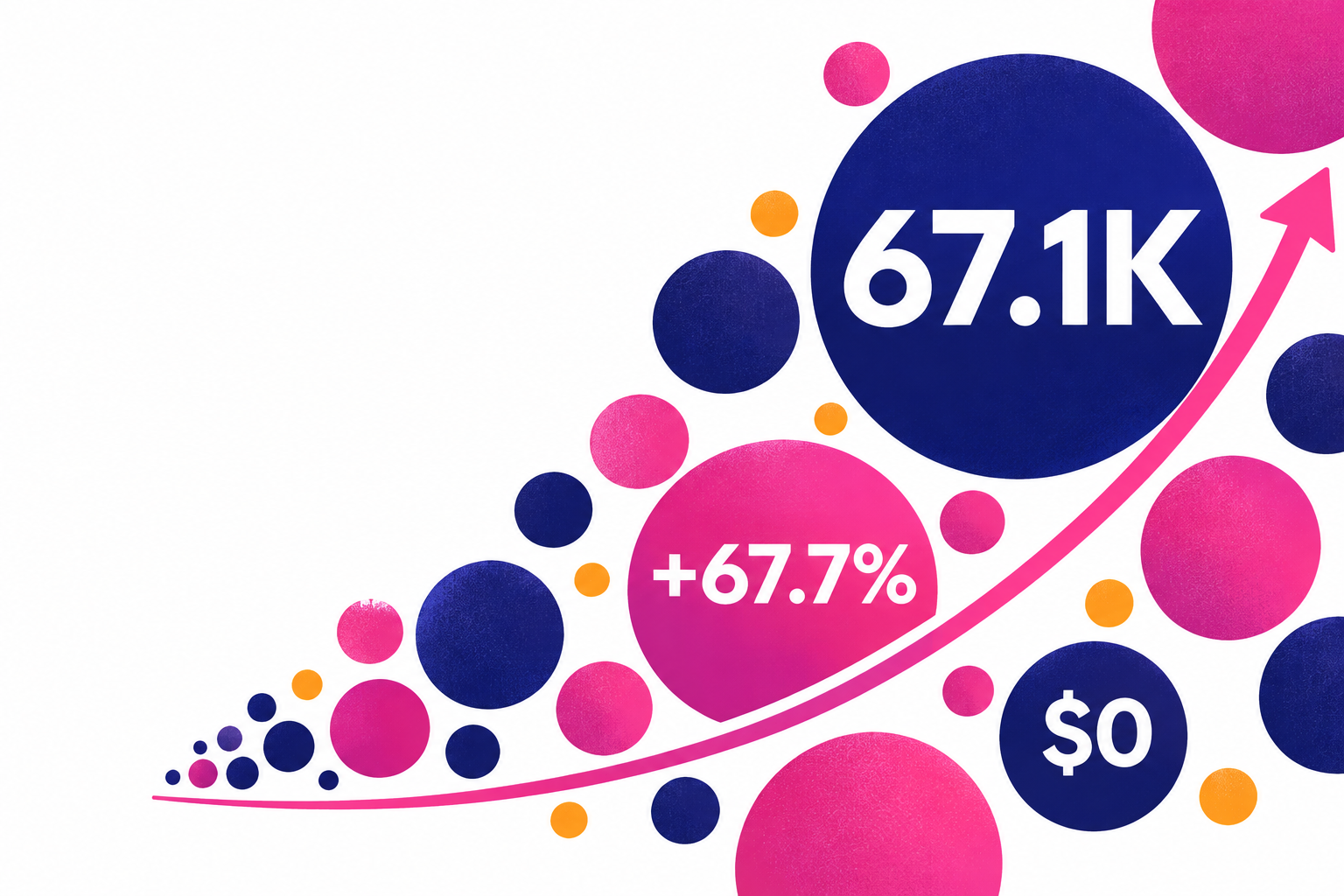
It doesn't have to be that way, and it doesn't take an ad budget. In this guide, we'll walk through a simple social media strategy for nonprofits, using a real example: how Impact100 Greater Sacramento reached 67.1K views and grew 67.7% in a few months, with $0 spent on paid ads.
Why Social Media Matters for Nonprofits
Social media is where your community already spends its time. For a nonprofit, a consistent presence does four things that are hard to do any other way:
- Builds awareness. People can't support a cause they've never heard of. Every share puts your mission in front of someone new.
- Earns trust. Regular posts about real people, real events and real results show that your organization is active and accountable.
- Recruits members, volunteers and donors. Your followers are your warmest audience when it's time to ask for help.
- Lifts your partners. When you spotlight the people and organizations you work with, their communities start following you too.
The catch is consistency. One great post won't move the needle. A steady rhythm of useful, human content will.
A Real Example: Impact100 Greater Sacramento
Impact100 Greater Sacramento is a nonprofit that brings women from all backgrounds together to award transformational $100,000 grants to local organizations. It started when founding President Evelyn Jensen, a nonprofit volunteer for more than 30 years, rallied about a dozen women leaders to launch a Sacramento chapter. Today it has 413 women members, has awarded more than $1.4 million in grants, and has funded more than 15 nonprofits.
Like many nonprofits, Impact100 runs on volunteer time, not a marketing department. The team needed a steady online presence to grow awareness of collective giving, membership, events and their grant partners, without paying for ads.
Spark Pro Global took over their Instagram and Facebook. We built the organic strategy and created and posted all of the content, about three posts a week. Here's what happened between late June and October 2026:
| Result | What it means |
|---|---|
| 67.1K total views, +67.7% | Far more of Sacramento saw Impact100's work |
| 155.3% view growth | September's grant campaign compared with the prior period |
| 1.4K interactions, +135.1% | People didn't just scroll past; they engaged |
| 240 new followers | Facebook and Instagram, July 1 to September 30 |
| 1,043 Instagram followers | Passed the 1K milestone |
| 9 hours a week | Time handed back to the Impact100 team, within budget |
| $0 | Spent on paid ads |

Within a few weeks, Impact100's following passed that of a local organization with 25 years of history. The bigger win, though, was what the attention did for the community. Grant finalist spotlights and the Annual Celebration campaign helped Sacramento discover local nonprofits. In September alone, Impact100's Instagram drew 502 profile visits (+93.8%) and 96 new follows, all organic.
A Nonprofit Social Media Strategy in 6 Steps
Here's the approach behind those results. You can use it whether you post yourself or hand it to a partner.
1. Pick one or two platforms and do them well
You don't need to be everywhere. Choose where your members, donors and volunteers already are. For most community nonprofits, that's Instagram and Facebook. Impact100 focused on just those two.
2. Set goals you can measure
"Get more followers" is a start, but tie it to your mission. Do you want more members, more event sign-ups, or more awareness of your grant partners? Pick two or three numbers to watch each month, such as views, interactions and profile visits.
3. Build content around your mission, not your logo
The posts that perform best put people first. For Impact100, that meant a few repeatable content pillars:
- Spotlights on grant finalists and winners
- Event promotion for the Annual Celebration and member voting
- Recaps of events, with real photos
- Member stories and everyday community moments
Spotlighting the nonprofits you support has a bonus effect. Their audiences share the posts, and your reach grows with theirs.
4. Plan around your calendar
Every nonprofit has a natural rhythm: a fundraiser, a giving season, a grant cycle, an annual event. Build campaigns around those moments. Impact100's September grant campaign alone drove 155.3% view growth.
5. Post consistently
Consistency beats volume. Impact100 posted about three times a week, every week. A simple content calendar makes this far easier, because you're never starting from a blank page. The same rule holds for email: see how often you should send marketing emails and what going weekly did for one local business.
6. Measure monthly and adjust
Check your Meta Business Suite insights once a month. Look at which posts got the most views and interactions, then do more of what worked. This is how you grow organically without guessing.
When to Get Help With Social Media Management
If your team is made of volunteers, or one staff member wears every hat, social media is usually the first thing to slip. That's when outside help pays for itself.
A good social media partner for a nonprofit should handle the strategy, create and schedule the content, and report on results each month, all within your budget. For Impact100, that meant 9 hours a week back for the team and a reliable content and reporting process they didn't have before. That's what our social media management team does, and you can see more results like these on our case studies page.
Frequently Asked Questions
How often should a nonprofit post on social media?
Aim for two to four posts a week on each platform you use. Impact100 posted about three times a week. A steady schedule matters more than a high number.
Can a nonprofit grow on social media without paid ads?
Yes. Impact100 Greater Sacramento reached 67.1K views and +67.7% growth with $0 in ads. Organic growth comes from consistent posting, real stories, and spotlighting partners whose audiences share your content.
Which social media platform is best for nonprofits?
The one your supporters already use. For most local nonprofits, that's Facebook and Instagram. Start there before adding more.
What should a nonprofit post on social media?
People and impact. Spotlight the people you serve or fund, promote your events, share recaps and photos, and tell member and volunteer stories.